
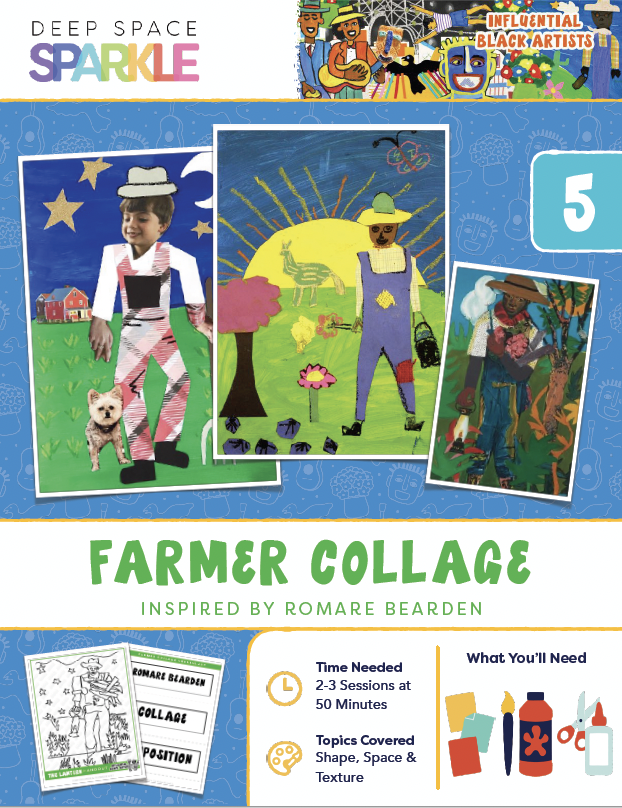
This lesson explores the work of artist Romare Bearden while emphasizing mixed-media collage, cutting, arranging, gluing, texture, and space. Students complete this multi-step project while coming to an understanding that a... Learn More
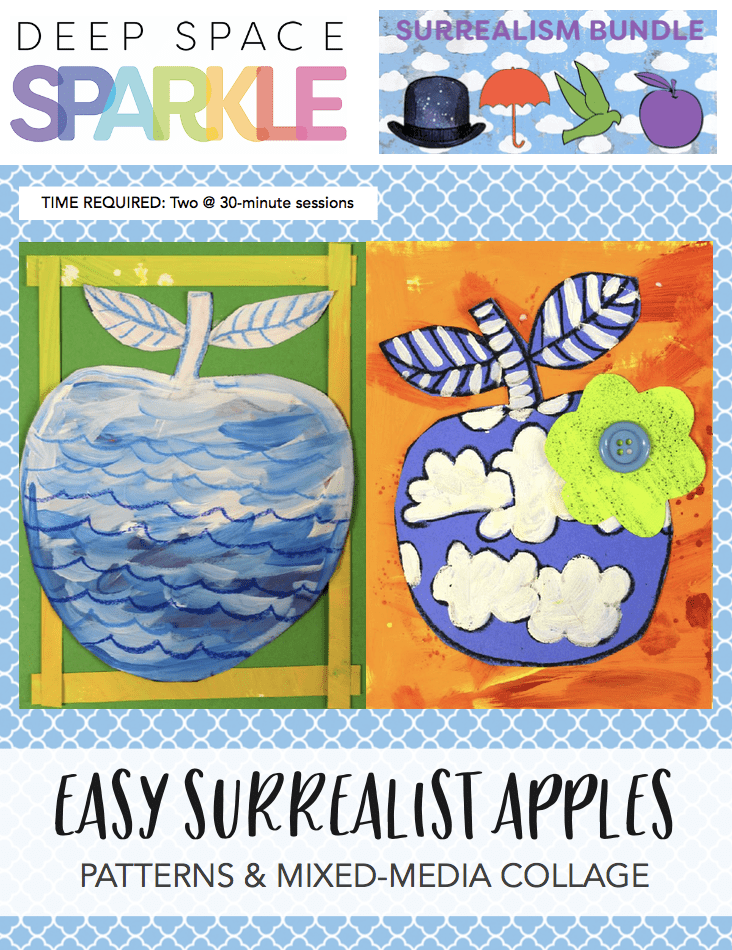
In this lesson, children use painted paper or colored paper for the backdrop to a colorful, surrealist apple. Children learn about René Magritte and why apples appear in many of... Learn More
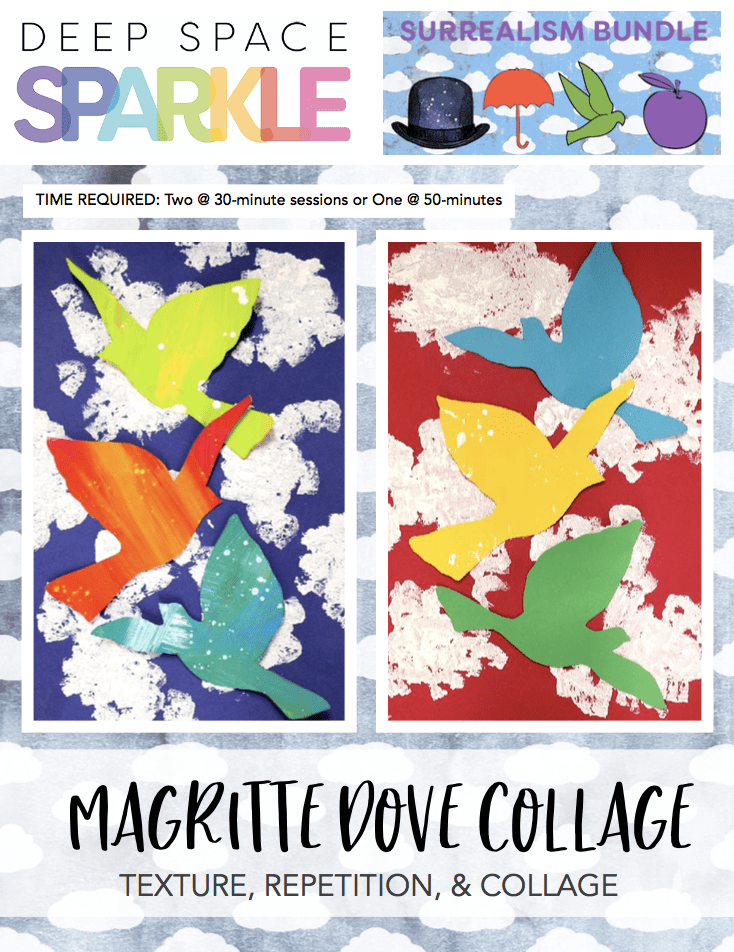
In this lesson, children use painted paper or colored paper for the backdrop and the silhouette of a dove. Children learn about René Magritte and why doves appear in many... Learn More
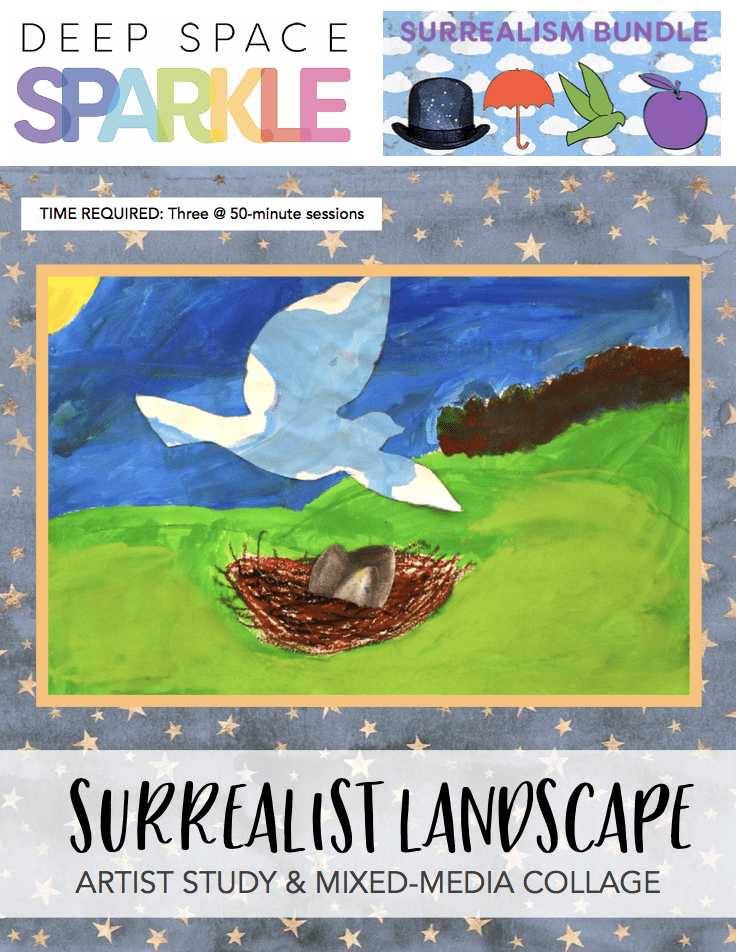
In this lesson, children create layers of Surrealism. Inspired by René Magritte’s painting, The Return, children paint clouds, create a template, paint a landscape and add a nest of eggs.... Learn More
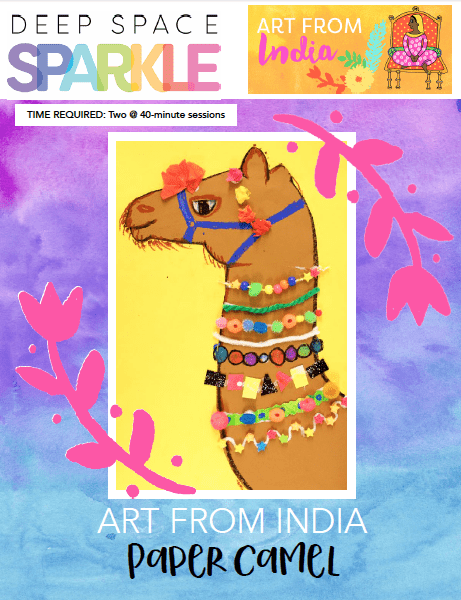
This lesson is a great opportunity to introduce children to camels. In Rajasthan, camels are decorated with tassels, beads and tattoos. Many camel decoration artists continue with this long- standing... Learn More
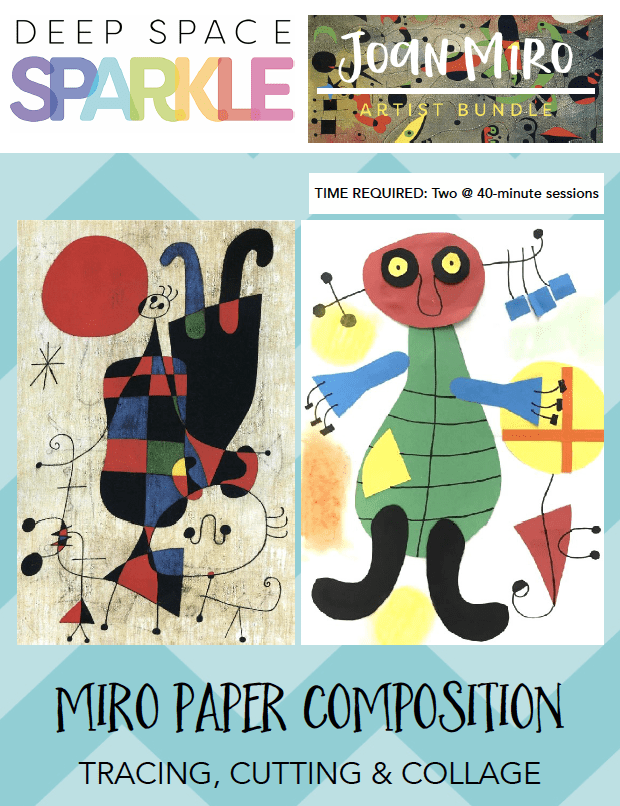
Joan Miró was a Spanish painter, sculptor and print-maker. His first paintings were inspired by Cubism and his later works were more magical and child-like. The painting that inspired this... Learn More
Joan Miró was a Spanish painter, sculptor and print-maker. His first paintings were inspired by Cubism and his later works were more magical and child-like. The painting that inspired this... Learn More
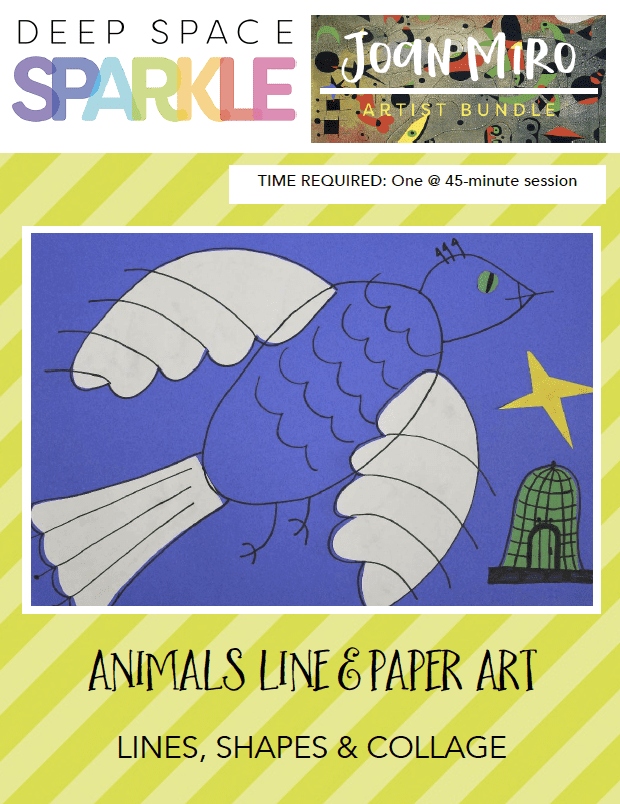
Joan Miró was a Spanish painter, sculptor and print-maker. His first paintings were inspired by Cubism and his later works were more magical and dream-like. The art he created during... Learn More
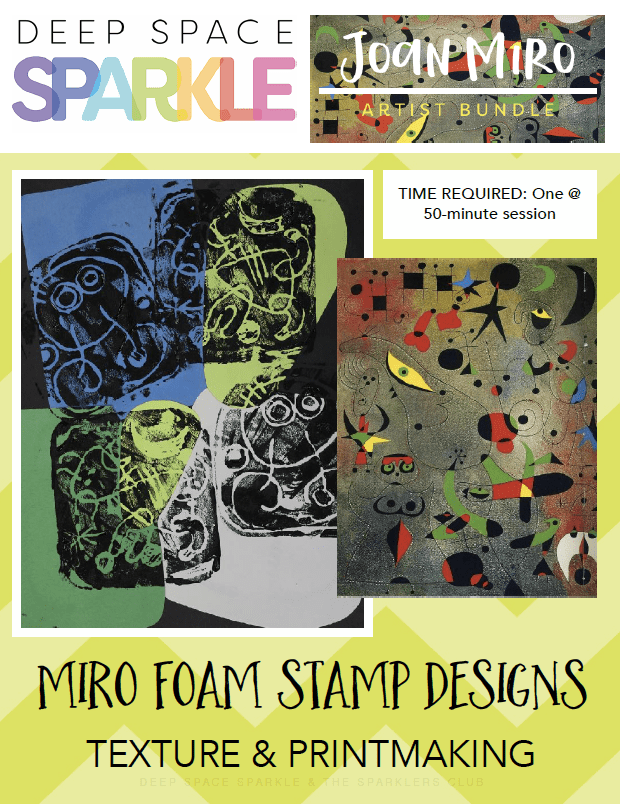
Miró started making prints after he was considered a well accomplished artist. He used two types of print-making: lithography and intaglio. Lithograph: Ink is spread onto the plate and then... Learn More
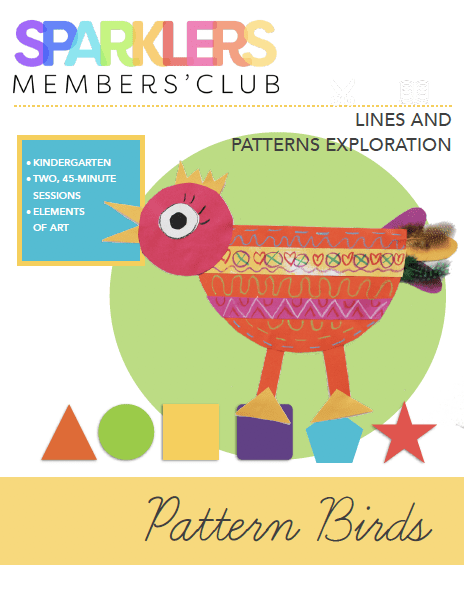
One of the first things I try to teach my Kinders is that shapes are created by lines. This is such a fascinating concept to learn and after they begin... Learn More
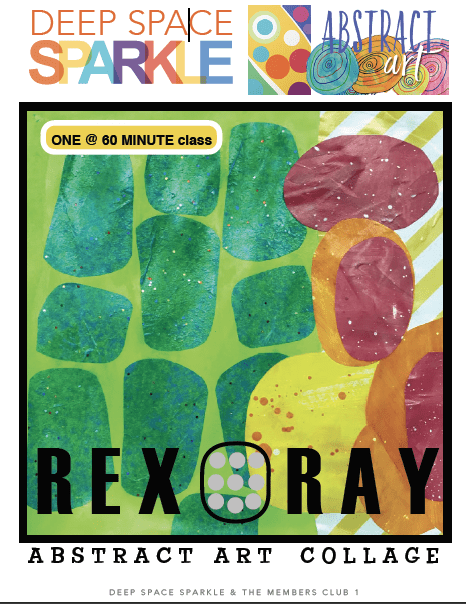
Creating collages is a wonderful way for children to express their sense of color and composition. It’s not always easy though, which is why I recommend showing children a few... Learn More
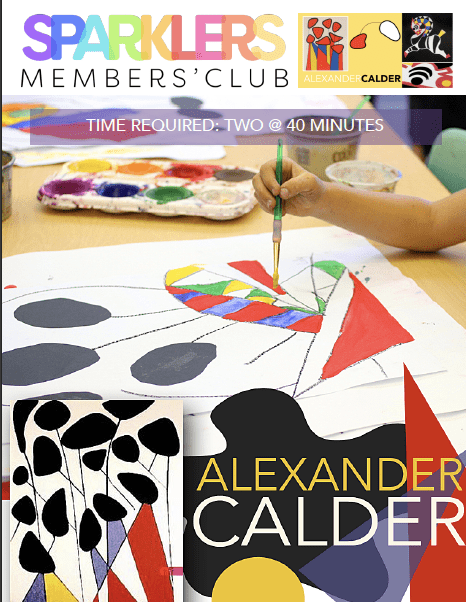
This is an easy project that illustrates Calder’s use of line, shape and form. It’s a great substitute for a prep intensive form-based project. Second grade students do very well... Learn More
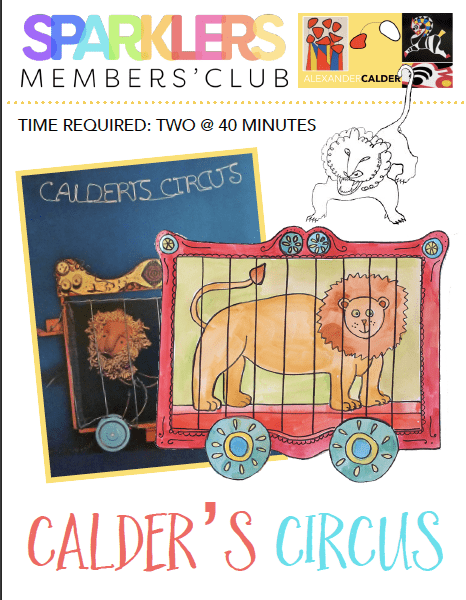
Calder liked the circus so much that he created his own. The Calder Circus had over 50 moving figures made out of wire, leather and cloth.... Learn More
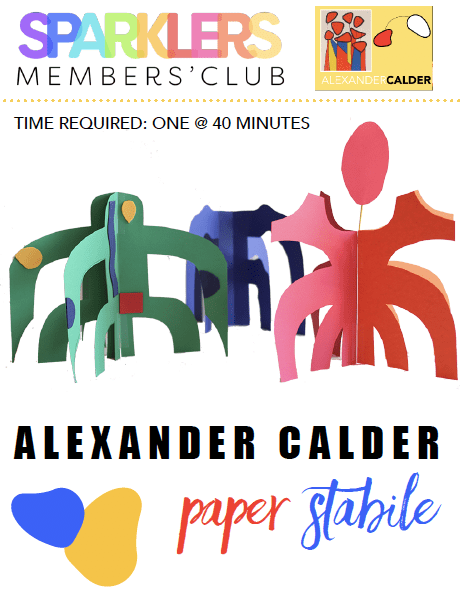
This STABILE project requires a small amount of time and offers much creative opportunity. Painted cereal box cardboard would make a great substitution for card stock and would offer more... Learn More
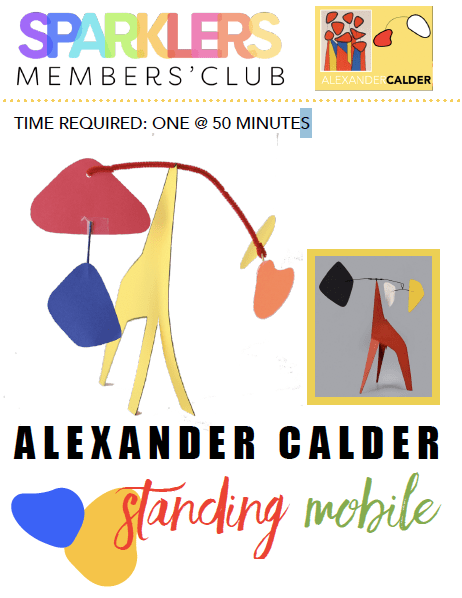
Calder combined Mobiles and Stabiles to create standing mobile units. Often these were in abstract shapes and animals shapes.... Learn More
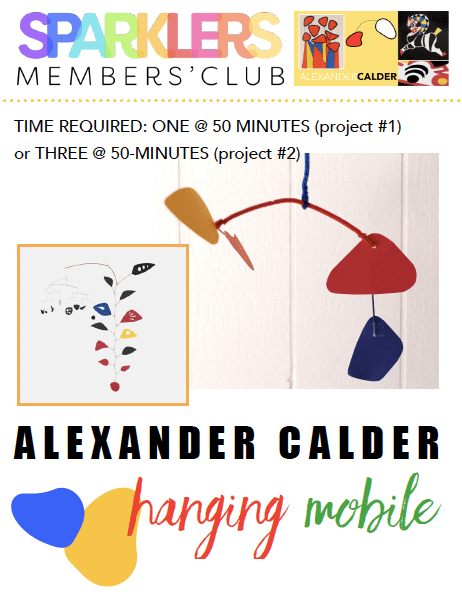
Alexander Calder introduced a new element to art by adding movement through hanging sculptures called mobiles. The movement creates a new art experience based on the changing direction of each unit.... Learn More
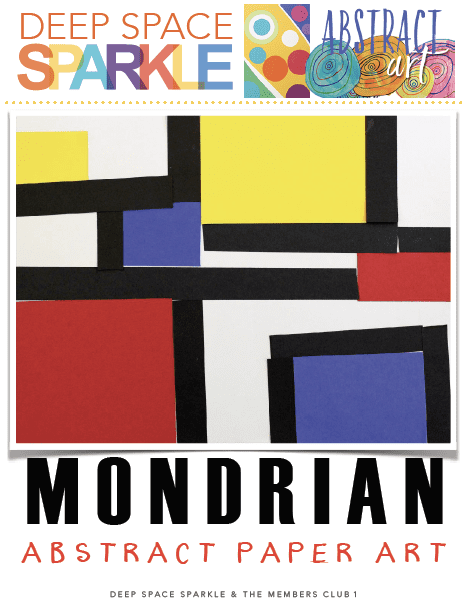
Creating Mondrian-style art requires both creativity and a good math sense. Lines should be straight, so using a straight edge is important. Many kids at this age do not know... Learn More
Creating collages is a wonderful way for children to express their sense of color and composition. It’s not always easy though, which is why I recommend showing children a few... Learn More